

The Real Deadline Behind the Deadline
An extension buys time to file. It does not buy time to think. If a 2025 return went on extension in April, October 15, 2026 is the final, hard stop. No further extension exists. Miss it, and the penalties that were paused in April start accruing again, calculated back to the original due date.
From late July, that date sits under 12 weeks out. It feels distant. It is not. The appointment that should happen now routinely gets pushed to September, and September is when every CPA firm in the country hits capacity at the same time.
What Happens When You Wait
The math on waiting is straightforward, and it is not in the taxpayer's favor. A return prepared in early August, with six to eight weeks of runway, allows time to reconcile records, resolve missing documents, and model decisions before they are locked in. A return started in the first week of October has none of that room. Questions that should take a phone call take an amended return.
ZSS sees this pattern every cycle: business owners with K-1s from multiple entities, real estate investors reconciling multiple properties, and high-income earners with equity compensation all treat the extension date as the start of the process instead of the end of it. By the time they call, the only options left are the fast ones, not the correct ones.

The Cost Is Rarely the Return Itself
Late-scheduled returns are not usually wrong. They are usually incomplete, missing elections, unclaimed credits, and unreviewed entity structures that a rushed preparer does not have time to catch. The dollar cost shows up later, in the deduction that was never taken and the strategy that was never discussed.
What "Being Ready" Actually Means
Readiness is not a stack of paper. It is a small, specific set of items that let ZSS build the return correctly on the first pass instead of the third.
Bring This to Your Appointment
- All K-1s, 1099s, and W-2s received since the April extension was filed
- Any entity, ownership, or business structure changes made this year
- Records of estimated tax payments made in 2026
- Documentation for any real estate transactions, refinances, or 1031 exchanges
- A short list of any major life or business events, such as a sale, acquisition, relocation, or new dependent
The ZSS Approach: Plan the Return, Don't Just File It
ZSS treats the extension period as a planning window, not a waiting room. Every appointment scheduled before September includes a review of entity structure, estimated payment accuracy, and any credits or elections that apply before the return is finalized, not after. That review is the difference between a return that is technically correct and one that is strategically correct.
Firms that are already full by September cannot offer that review. They can only offer completion. ZSS books appointments now specifically to protect the planning conversation, not just the paperwork.
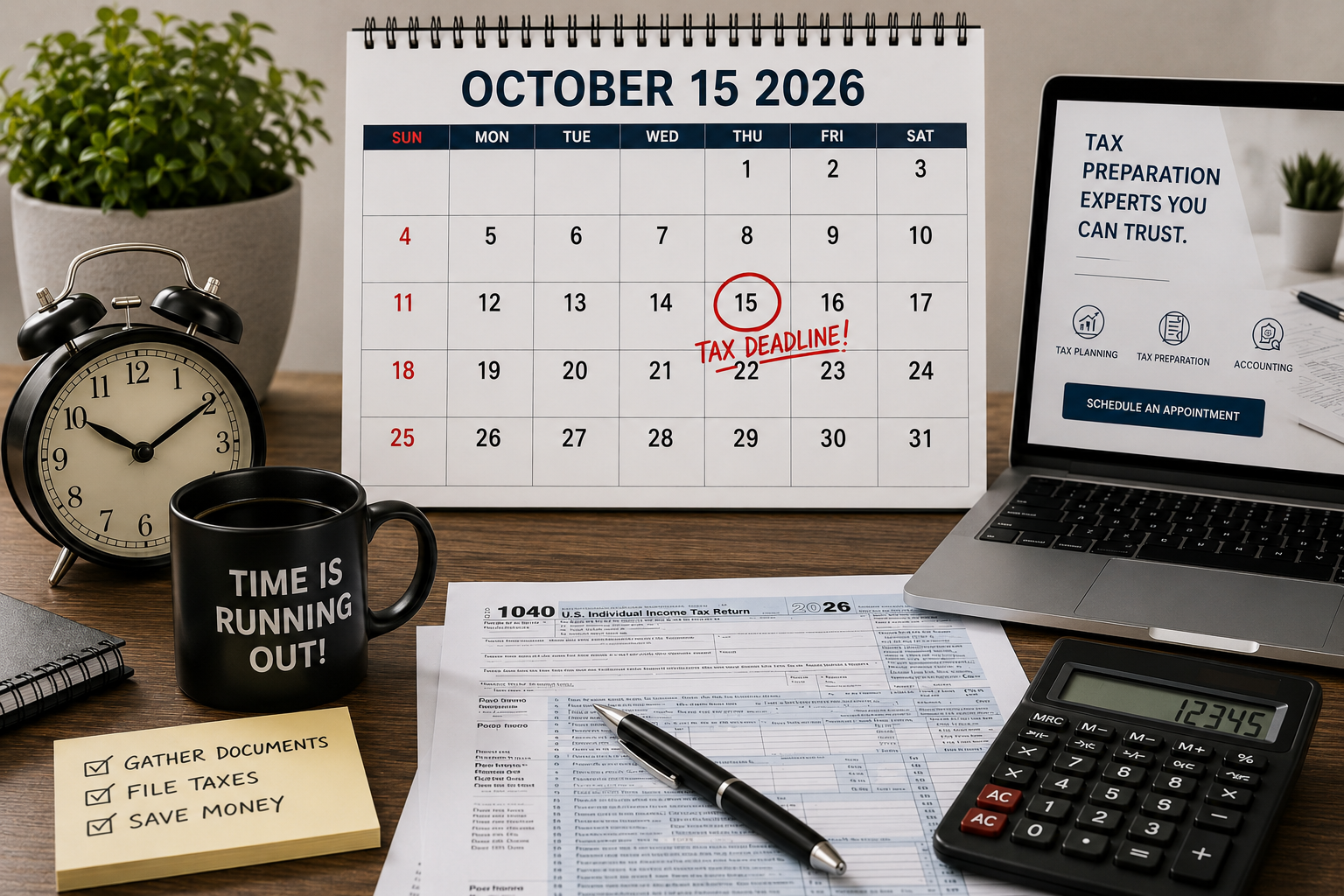
The calendar between now and October 15 is the only leverage left on this year's return. Use it.
Schedule Your AppointmentKey Takeaways
- October 15, 2026 is a hard deadline. No further extension is available.
- Appointments scheduled in August leave room to plan; appointments scheduled in October leave room only to file.
- Missed deductions and unreviewed structures, not filing errors, are the real cost of waiting.
- ZSS uses the extension window to plan the return, not simply complete it.